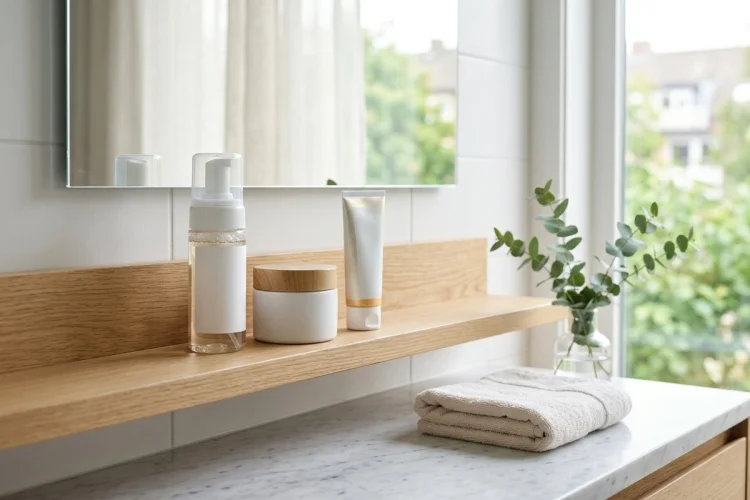
Skincare can become confusing surprisingly quickly. One video tells you that you need seven different serums, another recommends exfoliating acids, and suddenly your bathroom shelf looks more like a small laboratory than a place to wash your face.
The good news is that healthy skincare does not have to be complicated.
Learning how to build a simple and consistent skincare routine usually starts with just a few fundamentals: gentle cleansing, moisturizing, and sun protection.
The American Academy of Dermatology (AAD) specifically emphasizes that consistency can matter more than following an elaborate 10-step routine.
Once those basics are working well, you can decide whether your skin actually needs anything else.
A simple routine is also easier to maintain. Instead of constantly switching products based on trends, you can focus on understanding how your skin responds and introduce changes gradually.
Here is how to build an everyday skincare routine that is practical, affordable, and much easier to stick with.
1. Start With the Three Basic Skincare Steps
If you are completely new to skincare, forget about complicated product categories for now.
Start with three basics:
Cleanser → Moisturizer → Sunscreen
That is enough to create a solid foundation for many people.
The AAD recommends gentle cleansing, moisturizing, and daily sun protection as fundamental skincare habits. Its dermatologists also advise using fragrance-free moisturizer when sensitivity is a concern and choosing a broad-spectrum sunscreen with SPF 30 or higher.
Your morning routine could therefore be:
Gentle cleanser → Moisturizer → Sunscreen
At night:
Gentle cleanser → Moisturizer
Simple.
Once you can follow those steps consistently, you can consider adding products for specific concerns.
2. Choose a Gentle Cleanser
Cleansing removes sweat, excess oil, dirt, and products that accumulate on your skin.
But “clean” should not mean aggressively scrubbed.
AAD guidance for acne-prone skin recommends gently washing the face up to twice daily and after sweating, using a mild, non-abrasive cleanser and your fingertips rather than harsh scrubbing tools.
If your skin feels extremely tight, uncomfortable, or irritated after washing, your cleanser or technique may be too harsh.
People with dry or sensitive skin may not always need the same cleansing frequency as someone with oily skin. AAD dermatologists note that some people with dry or sensitive skin may find washing once in the evening sufficient.
Pay attention to how your skin responds instead of assuming that more washing automatically means healthier skin.
3. Do Not Skip Moisturizer
Moisturizer is not only for people with visibly dry skin.
Its main job is to help support hydration and reduce water loss from the skin. For dry skin, the AAD recommends applying moisturizer while the skin is still slightly damp after washing or bathing.
Choose the texture according to what feels comfortable.
A lightweight lotion or gel may feel better if your skin tends to be oily, while richer creams or ointments can be useful for very dry skin.
If you are prone to acne, look for products labeled non-comedogenic or “won’t clog pores.” AAD guidance commonly recommends these types of products for acne-prone skin.
Most importantly, moisturizer should feel comfortable enough that you actually want to use it every day.
An expensive moisturizer you rarely apply is less useful than a simple one that becomes part of your routine.
4. Make Sunscreen a Daily Habit
If your skincare routine only contains one daytime protection step, make it sunscreen.
AAD dermatologists recommend choosing sunscreen that provides broad-spectrum protection, SPF 30 or higher, and water resistance. Broad-spectrum products protect against both UVA and UVB radiation.
Apply sunscreen after your other skincare products and before makeup when you will be exposed to daylight.
AAD guidance also recommends applying sunscreen before going outdoors and reapplying approximately every two hours while outside, particularly when swimming or sweating.
The FDA similarly emphasizes that sunscreen works best as part of broader sun protection, alongside measures such as shade, protective clothing, hats, and sunglasses.
Do not save sunscreen only for beach holidays.
Regular exposure happens during ordinary activities such as commuting, walking, exercising outdoors, or spending time near sunny areas.
5. Add Active Ingredients One at a Time
Once your basic routine is established, you may want to address concerns such as acne, uneven tone, dryness, or signs of aging.
This is where active ingredients may enter the picture.
The mistake is introducing several at once.
If you simultaneously start retinol, exfoliating acids, vitamin C, and multiple acne treatments, irritation can occur-and you may have no idea which product caused it.
AAD dermatologists specifically recommend starting with one additional product rather than layering several new anti-aging products together because combining too many can irritate the skin.
Choose your biggest concern first.
For example, if acne is the main issue, build your routine around that concern rather than purchasing five unrelated serums.
Give products time to work and follow their directions carefully.
Skincare does not usually reward impatience.
6. Patch Test New Products
Even products marketed as gentle, natural, or hypoallergenic can potentially cause irritation or allergic reactions.
That is why testing new products can be useful, especially if your skin is sensitive.
AAD dermatologists recommend applying a new skincare product to a small test area twice daily for around seven to ten days before using it more widely.
If you notice redness, itching, swelling, or another significant reaction, stop using the product.
The FDA also cautions that cosmetics can trigger allergic reactions in some people and that terms such as “hypoallergenic” do not guarantee that a reaction will never occur.
This is another reason to introduce products slowly.
When you add only one new product at a time, identifying what your skin likes-or dislikes-becomes much easier.
7. Avoid Over-Exfoliating and Over-Cleansing
When people want clearer or smoother skin, their instinct is often to do more.
More cleansing.
More exfoliation.
More acids.
More scrubbing.
Unfortunately, aggressive skincare can create its own problems.
AAD acne guidance specifically advises against harsh scrubbing because irritation may make breakouts worse. It also recommends avoiding products that unnecessarily dry or irritate acne-prone skin.
Exfoliating products can have a place in some skincare routines, but they are optional-not a basic requirement for everyone.
If you use an exfoliant, follow the product instructions and avoid assuming that stronger or more frequent use will automatically produce faster results.
Burning, persistent redness, significant peeling, or ongoing irritation are not signs that your skincare is “working harder.”
Sometimes the best thing you can do for your skin is simply use fewer products.
8. Make Your Routine Easy Enough to Repeat
The ideal skincare routine is not the one with the most products.
It is the one you can realistically maintain.
If you regularly forget your nighttime routine because it takes 30 minutes, simplify it.
Keep your cleanser and moisturizer somewhere easy to reach. Put sunscreen beside products you already use every morning.
You can even connect skincare with existing habits.
Brush your teeth, wash your face, apply moisturizer.
In the morning, add sunscreen.
That repetition makes skincare automatic rather than something you have to motivate yourself to do every day.
Avoid constantly replacing products just because something new is trending online.
If your current routine feels comfortable and is helping you maintain healthy-looking skin, there may be no reason to completely redesign it.
9. Adjust Your Routine When Your Skin Changes
Your skin does not necessarily behave the same way forever.
Weather, humidity, age, medications, hormonal changes, and lifestyle can all influence how it feels.
You may prefer a lighter moisturizer during humid months and a richer formula when the air becomes dry.
Similarly, if you suddenly develop persistent irritation, significant acne, unusual rashes, or another ongoing skin concern, buying more cosmetics may not be the best answer.
A dermatologist can help determine whether you are dealing with a medical skin condition rather than a problem that ordinary skincare products can solve.
If a cosmetic causes a serious reaction, the FDA advises stopping the product and contacting a healthcare professional.
Skincare should support your skin-not become a substitute for appropriate medical care.
Learning how to build a simple and consistent skincare routine does not require filling your bathroom with expensive products.
Start with the basics: use a gentle cleanser, apply moisturizer, and protect your skin with broad-spectrum SPF 30 or higher sunscreen during the day. Once that routine feels automatic, add one targeted product at a time if you have a specific concern.
Introduce new products slowly, patch test when appropriate, and pay attention to irritation instead of assuming that discomfort is part of the process.
Most importantly, prioritize consistency over complexity.
Start tonight with three simple steps: wash gently, moisturize, and repeat tomorrow. Add sunscreen in the morning. A routine that takes only a few minutes but happens every day is far more useful than an impressive 10-step routine you rarely follow.