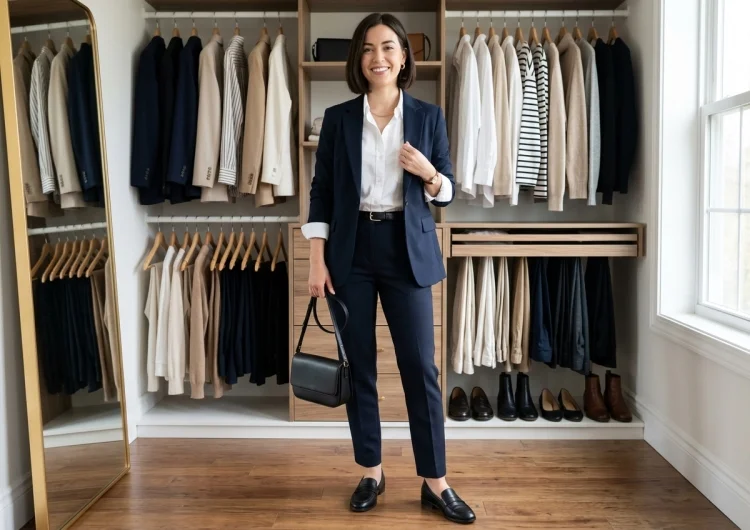
Looking polished does not mean wearing expensive designer clothes, following every new fashion trend, or spending an hour deciding what to wear every morning.
In fact, some of the most stylish outfits are surprisingly simple.
A crisp shirt with well-fitting trousers, jeans paired with a blazer, or a basic T-shirt finished with clean shoes and a structured bag can look more intentional than an outfit containing several complicated statement pieces.
The secret is understanding how to build simple outfits that always look polished. Instead of constantly buying new clothes, you can focus on fit, proportion, color, fabric, grooming, and a few versatile wardrobe essentials.
That approach also makes getting dressed much easier. Vogue’s current wardrobe guidance continues to highlight versatile staples such as button-down shirts, tailored trousers, blazers, classic jeans, knitwear, and simple footwear as foundations that can work across multiple outfits.
Once you have a few reliable formulas, looking put-together becomes less about effort and more about consistency.
1. Start With Clothes That Fit Properly
Before worrying about colors or accessories, pay attention to fit.
Even an expensive jacket can look awkward if the shoulders sit incorrectly or the sleeves are far too long. Meanwhile, an affordable pair of trousers can look surprisingly sophisticated when the proportions suit you.
“Good fit” does not mean every piece needs to be tight.
An oversized blazer can look polished. Wide-leg trousers can look elegant. A relaxed shirt can look intentional.
The difference is whether the volume appears deliberate.
Check where shoulder seams sit, whether trousers drag excessively on the floor, whether waistbands feel comfortable, and whether sleeves end somewhere sensible.
Small alterations can sometimes improve clothes you already own more effectively than buying replacements.
If you regularly avoid a particular item because something about it feels wrong, fit may be the real problem.
2. Build Your Wardrobe Around Reliable Basics
You do not need dozens of basics in every color imaginable.
Instead, identify a small group of pieces that work with many things you already own.
Depending on your lifestyle, that might include a plain T-shirt, crisp button-down, good jeans, tailored trousers, simple knit, blazer or jacket, versatile dress, clean sneakers, loafers, or ankle boots.
Vogue’s minimalist wardrobe guidance recommends defining your personal “wardrobe foundations” rather than blindly copying somebody else’s capsule wardrobe.
That distinction is important.
Someone working in a creative office may wear relaxed trousers, shirts, and sneakers constantly. Someone living in a hot climate might rely much more heavily on lightweight shirts, simple dresses, linen trousers, and sandals.
The best wardrobe essentials are the clothes that make your everyday outfits easier.
3. Use Simple Outfit Formulas
One of the easiest ways to avoid staring at your wardrobe every morning is to create a few outfit formulas.
An outfit formula is simply a combination you know works.
For example:
T-shirt + tailored trousers + loafers
Button-down shirt + straight-leg jeans + simple flats
Knit + trousers + structured jacket
Simple dress + minimal shoes + small accessories
The individual clothes can change while the basic formula stays the same.
Fashion editors frequently rely on this idea. Recent simple-outfit guides have highlighted combinations such as jeans with blazers and boots, or basic shirts and trousers styled with restrained accessories, because straightforward pairings can still look intentional.
Take photographs of outfits you particularly like.
The next time you do not know what to wear, you already have your own personal reference library.
4. Keep Your Color Palette Easy to Combine
Color does not need to be complicated.
Neutral shades such as black, white, navy, beige, cream, grey, brown, and denim are popular foundations because they tend to mix easily.
But you certainly do not have to dress entirely in neutrals.
The useful strategy is creating some level of repetition.
If your trousers, shoes, jackets, and bags generally coordinate with several tops, you can create far more outfits with fewer pieces.
Try Monochromatic Dressing
One of the simplest ways to look polished is wearing one color or several shades from the same color family.
For example, combine cream trousers with an off-white shirt and beige shoes.
Or wear charcoal trousers with a grey knit and darker outerwear.
Monochromatic dressing creates visual continuity and is frequently used as an easy way to make uncomplicated outfits appear more cohesive.
If that feels too minimal, add one contrasting accessory.
A colorful bag, scarf, pair of shoes, or piece of jewelry can provide personality without overwhelming the outfit.
5. Pay Attention to Proportion
An outfit can contain great individual pieces but still feel slightly wrong because the proportions compete with one another.
Think about balance.
If your trousers are extremely wide, a more fitted or neatly tucked top can create definition. If you are wearing a slim skirt, a relaxed knit or slightly oversized jacket may create an interesting contrast.
This is not a strict rule.
Fashion often becomes interesting by deliberately breaking conventional proportions.
However, when your goal is a simple polished outfit, creating some visual balance is an easy place to begin. Fashion editors frequently use contrasting proportions—such as fitted tops with wider trousers—to turn basic pieces into more intentional combinations.
Experiment in front of a full-length mirror.
Try tucking the shirt in, leaving it out, rolling the sleeves, or changing the jacket length.
Sometimes the outfit does not need another item. It simply needs a small adjustment.
6. Add One Structured Element
Structure can immediately give casual clothing a more refined appearance.
That is why blazers, tailored trousers, crisp shirts, structured coats, leather bags, and defined shoes frequently appear in polished outfit formulas.
You do not need to wear all of them together.
Imagine basic jeans and a T-shirt.
Add a well-cut blazer and loafers, and the same foundation suddenly looks more deliberate.
Alternatively, combine relaxed knitwear with tailored trousers.
The contrast between relaxed and structured elements keeps simple outfits from looking too informal.
Current minimalist styling continues to lean heavily on these types of combinations, with tailored trousers, blazers, button-downs, and classic outerwear appearing repeatedly as versatile foundations.
One structured piece is often enough.
7. Let Your Shoes Finish the Outfit
Shoes have a surprisingly large effect on how an outfit feels.
Imagine the same black trousers and white shirt with running shoes, minimalist sneakers, loafers, ballet flats, boots, and heels.
The clothes barely change, but the overall impression does.
For an easy polished look, keep footwear reasonably clean and in good condition.
Classic loafers, simple flats, understated sneakers, boots, sandals, and other streamlined styles can work depending on your climate and personal style.
You do not need dozens of pairs.
A small number of shoes that coordinate with most of your wardrobe is often more useful than owning many pairs that only work with one outfit.
Vogue’s wardrobe and accessory guides similarly emphasize versatile footwear that can move between multiple looks rather than relying entirely on highly specific trend pieces.
8. Use Accessories With Intention
Accessories are useful because they can make a very basic outfit feel finished.
But you do not necessarily need many of them.
A simple watch, earrings, belt, necklace, scarf, sunglasses, or structured bag can be enough.
Think of accessories as punctuation.
They should help complete the outfit rather than compete for attention.
For example, if you are wearing a plain black dress, a belt and earrings may provide enough detail.
If your clothes already contain bold patterns or strong colors, quieter accessories might work better.
Another useful approach is choosing one focal point.
A colorful bag or interesting necklace can become the feature while everything else stays simple.
This makes experimenting with fashion easier because you can update familiar outfits without replacing your entire wardrobe.
9. Make Sure Your Clothes Look Cared For
The difference between “simple” and “sloppy” often has very little to do with price.
Wrinkled fabric, stains, loose threads, pilling, damaged shoes, and missing buttons can make otherwise good outfits feel unfinished.
Basic clothing maintenance matters.
Hang or fold items appropriately, remove obvious lint, repair small problems early, and iron or steam clothes when the fabric requires it.
Most importantly, check the care label before washing or drying.
GINETEX, the organization behind the internationally recognized textile-care symbol system, explains that clothing labels provide guidance covering washing, bleaching, drying, ironing, and professional care.
Correct care can help clothes maintain their appearance for longer.
A five-year-old shirt in excellent condition may look far more polished than a brand-new shirt that has already been poorly washed or badly wrinkled.
10. Do Not Confuse Polished With Formal
You can look polished in jeans.
You can look polished in sneakers.
You can even look polished in a loose T-shirt.
The key is making the outfit appear intentional.
Recent fashion coverage describing “undone polish” makes this point clearly: combinations such as oversized blazers with jeans or relaxed T-shirts with tailored trousers can feel refined without looking formal.
You do not have to suddenly dress like you are attending a business meeting.
Keep your normal personal style.
If you love casual clothes, improve the fit, coordinate colors, maintain your shoes, and add one deliberate finishing detail.
If you prefer dresses, focus on flattering silhouettes and versatile layering.
Looking polished should still look like you.
11. Repeat Outfits Without Apologizing
A stylish wardrobe does not require a completely different outfit every day.
Repeating clothes is normal.
In fact, discovering combinations that consistently make you feel comfortable and confident is useful because it reduces decision-making.
You might eventually realize that you constantly wear black trousers with several different tops, or that your favorite blazer works with jeans, dresses, and skirts.
That is valuable information.
Build around those pieces instead of constantly chasing something new.
Vogue’s capsule and minimalist wardrobe coverage repeatedly emphasizes versatile, long-lasting clothes that can be combined in multiple ways rather than wardrobes driven entirely by short-lived trends.
Personal style often becomes stronger through repetition because certain colors, shapes, and combinations gradually become recognizable as your own.
Learning how to build simple outfits that always look polished has much less to do with buying more clothes than many people assume.
Start with pieces that fit well, build around versatile basics, and create a few reliable outfit formulas. Pay attention to proportion, coordinate your colors, add one structured element, choose intentional accessories, and keep your clothes and shoes in good condition.
Most importantly, do not confuse simplicity with boredom.
A white shirt and black trousers can look completely different depending on the fit, shoes, styling, and accessories.
Open your wardrobe today and create three simple combinations from clothes you already own. Photograph the ones that work.
Before long, getting dressed can become faster, easier, and much more consistently polished.