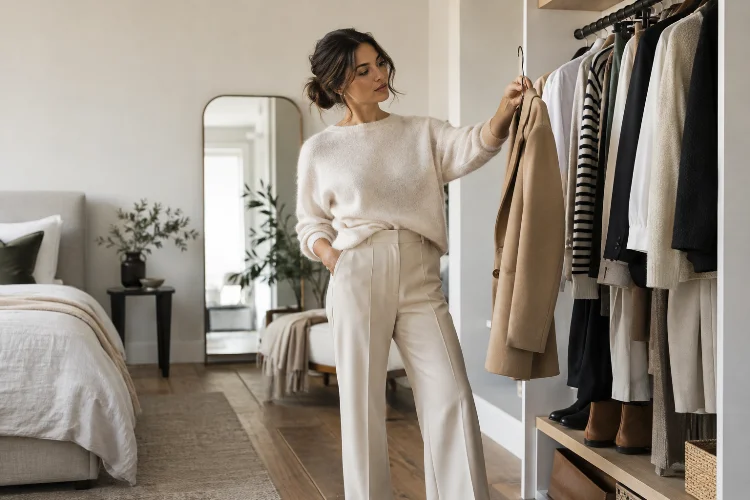
Some mornings, getting dressed takes five minutes. Other mornings, you somehow try on four shirts, two pairs of pants, and three jackets before deciding that nothing looks right.
The strange part is that the problem is not always a lack of clothes. Sometimes having too many options actually makes choosing an outfit harder.
That is where a few everyday fashion rules that make getting dressed easier can help. These are not strict rules about what you are “allowed” to wear.
They are simple guidelines that reduce decisions, make outfits easier to combine, and help you understand what works for your lifestyle.
You do not need an enormous wardrobe or expensive designer pieces to dress well. Fit, proportion, color coordination, comfort, and repetition usually matter much more.
Once you develop a few reliable outfit formulas, getting dressed becomes less like solving a puzzle every morning and more like following a system you already understand.
1. Prioritize Fit Before Trends
A basic shirt that fits well will usually look more polished than an expensive trend piece that constantly needs adjusting.
Fit affects how comfortable you feel moving, sitting, walking, and going through your normal day. Research examining clothing fit has also found connections between perceived fit, body confidence, comfort, and how people evaluate themselves while wearing clothes.
That does not mean every garment needs to be fitted closely.
Oversized shirts, relaxed trousers, wide-leg jeans, and loose jackets can all look intentional when the proportions make sense. The goal is simply to make sure the clothing fits the way the design is supposed to fit.
Do not become too attached to the number or letter printed on the label either. Sizing can vary significantly between manufacturers, so choose the garment that actually fits your body rather than the size you think you should wear.
2. Create a Few Reliable Outfit Formulas
One of the easiest ways to simplify everyday style is to stop inventing a completely new outfit every morning.
Instead, create a few combinations that you already know work.
For example, your casual formula might be straight-leg jeans + simple top + overshirt + sneakers. Your work formula might be tailored trousers + fitted knit + loafers. On warmer days, you might rely on relaxed pants + tucked T-shirt + sandals.
The specific pieces will vary depending on your lifestyle.
An outfit formula is useful because you are choosing within a structure rather than starting from zero.
Repeat Good Outfits Without Feeling Guilty
There is no fashion rule saying you must constantly create new combinations.
If an outfit looks good and feels comfortable, repeat it.
You can change small details such as footwear, jewelry, jacket, bag, or color while keeping the basic silhouette the same.
This can also help you identify what deserves space in your wardrobe. WRAP research into clothing use has found that many wardrobes contain substantial numbers of garments that go unworn for long periods.
Repeating your favorites is not boring. It is evidence that those pieces actually work.
3. Build Around Colors That Naturally Work Together
Color coordination becomes much easier when most of your wardrobe can communicate with the rest of it.
You do not need to wear only black, white, and beige.
Instead, choose a small group of neutral or foundational colors, then add several shades you genuinely enjoy wearing.
For example, a wardrobe might use navy, cream, charcoal, and denim as its foundation while adding green, burgundy, and soft blue.
Another person might prefer black, white, brown, olive, and brighter red accents.
The goal is compatibility.
When your tops work with several bottoms and your jackets work with multiple outfits, you naturally create more combinations with fewer pieces.
This is much more pratical than buying an exciting item and discovering later that it only works with one specific pair of trousers.
4. Balance Proportions Instead of Following Strict Body Rules
Traditional fashion advice often says particular body shapes should wear certain cuts and avoid others.
That can become unnecessarily restrictive.
A more flexible approach is to think about visual proportion.
If you are wearing very wide trousers, a shorter or more fitted top may create contrast. If your top is extremely oversized, a straighter bottom can sometimes make the silhouette feel more balanced.
But these are starting points, not laws.
You might intentionally wear oversized pieces together because you enjoy a relaxed silhouette. You might prefer long layers or dramatic volume.
Look at the complete outfit rather than judging each garment individually.
Sometimes an item that seems awkward by itself makes perfect sense once you change the shoes, adjust the hem, tuck the shirt slightly, or add a structured layer.
5. Let Your Lifestyle Decide What Belongs in Your Wardrobe
An effective wardrobe should match your actual calendar.
If you work from home five days per week, filling half your closet with formal office clothes may not make sense. If you walk everywhere, uncomfortable shoes probably should not dominate your footwear collection.
Think about how you spend a typical month.
Maybe 60 percent of your time is casual, 25 percent involves work or meetings, and 15 percent involves social events. Your wardrobe should roughly support that reality.
This also makes shopping easier.
Instead of asking, “Do I like this?” ask, “Where would I realistically wear this?”
A beautiful jacket can still be a poor purchase if it does not suit your climate, schedule, existing clothes, or comfort preferences.
Research on clothing consumption has similarly highlighted that garments often remain unworn for reasons including changing lifestyles, fit, fashion preferences, and special-occasion use.
6. Choose Comfort That Still Looks Intentional
Comfort and style do not have to be enemies.
The key is understanding what comfortable clothing works for you.
Maybe you prefer elastic-waist trousers, breathable fabrics, relaxed shirts, flat shoes, soft knitwear, or loose dresses.
Build around those preferences rather than repeatedly buying clothes that look good in the fitting room but feel annoying after two hours.
Small details can make comfortable clothing appear more intentional.
A clean sneaker, properly fitted hem, structured bag, neat tuck, simple jewelry, or lightweight jacket can transform basic pieces without making the outfit complicated.
When clothes feel physically uncomfortable, you are less likely to wear them regularly anyway.
Good style should support your day rather than become another thing you need to tolerate.
7. Keep a Few Dependable Wardrobe Basics
“Basics” do not have to mean the same thing for everyone.
A white button-down might be essential for one person and completely useless for someone else.
Your basics are simply the pieces that connect the rest of your wardrobe.
They might include jeans that fit properly, neutral trousers, simple T-shirts, knit tops, an everyday jacket, comfortable shoes, or a versatile dress.
Look at what you already wear repeatedly.
Those items reveal your real wardrobe essentials far better than an online list titled “20 Pieces Everyone Must Own.”
Quality matters here because frequently worn garments experience more washing, friction, and general wear. Research into clothing longevity suggests that keeping clothes in active use for longer can reduce the need for frequent replacement.
When replacing a heavily used basic, pay attention to fabric, construction, comfort, and durabilty, not just appearance.
8. Use One Statement Element at a Time When You Feel Unsure
Bold fashion can be fun, but combining several attention-grabbing elements requires more styling decisions.
If you want an easy approach, choose one focal point.
Maybe it is a colorful jacket, patterned trousers, unusual shoes, chunky jewelry, or a bright bag.
Keep the rest of the outfit relatively simple.
For example, patterned trousers can work with a plain knit and understated sneakers. A bright coat can sit over jeans and a neutral top.
This method creates visual interest without requiring every garment to compete for attention.
Once you become more comfortable mixing patterns, textures, and colors, you can absolutely break this rule.
Think of it as training wheels rather than a permanent restriction.
9. Prepare Your Wardrobe So Good Choices Are Visible
Sometimes getting dressed feels difficult because your useful clothes are buried.
The shirt you love is hidden behind items you never wear. Your favorite trousers are waiting in the laundry. Shoes are scattered across several places.
A small wardrobe reset can help.
Keep regularly worn clothes where they are easy to see. Store seasonal items separately when appropriate, and periodically remove pieces that are damaged, uncomfortable, or no longer fit your lifestyle.
You can also photograph outfits you particularly like.
Create a simple album on your phone. When you have no idea what to wear, scroll through combinations that already worked instead of starting from scratch.
Preparing clothes the evening before can also make rushed mornings significantly easier.
A little organising turns your wardrobe into a usable system rather than a collection of random garments.
10. Treat Fashion Rules as Tools, Not Laws
Perhaps the most useful everyday fashion rule is knowing when to ignore fashion rules. Clothing is partly functional, but it is also a form of identity and self-expression.
Research into “enclothed cognition” suggests that clothing can influence how people think, feel, and behave, although researchers have also noted that some early findings in this field did not replicate consistently.
A recent meta-analysis nevertheless found support for the broader idea that clothing can have psychological effects.
That is a good reason to pay attention to how clothes make you feel.
If monochrome outfits make getting dressed easier, wear them.
If you love mixing prints, do it. If you wear almost identical outfits throughout the week because they work perfectly, that is fine too.
Personal style becomes easier once you stop trying to satisfy every fashion rule simultaneously.
The best everyday fashion rules that make getting dressed easier are not really about chasing trends. They are about reducing unnecessary decisions.
Prioritize good fit, build repeatable outfit formulas, create an easy color palette, balance proportions, and choose clothes that reflect your real lifestyle. Keep reliable basics accessible and do not be afraid to repeat combinations that already work.
Most importantly, remember that fashion rules are guidelines rather than instructions.
Tomorrow, instead of trying to create something completely new, start with one outfit you already enjoy wearing. Identify why it works, then use that formula again with different pieces.
A wardrobe becomes much easier to use when you understand your own patterns rather than constantly searching for the next trend.