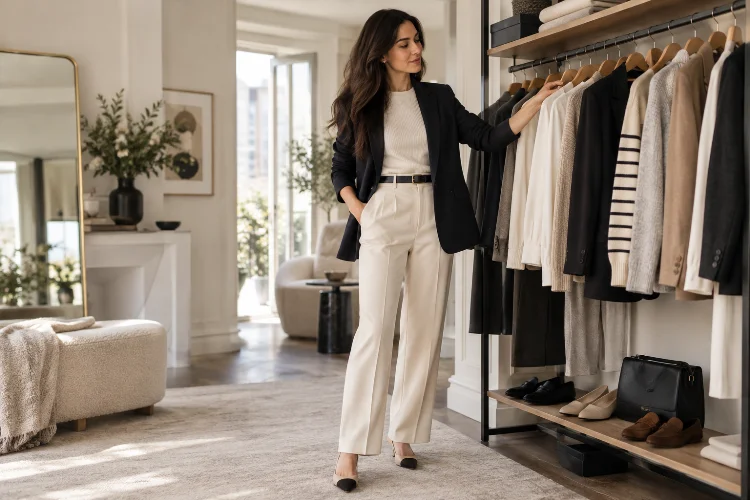
Fashion moves incredibly fast. One month everyone seems to be wearing oversized jackets, then suddenly fitted silhouettes return. A certain sneaker becomes unavoidable, a particular color fills your social feed, and before long another “must-have” item replaces it.
Trying to keep up can become expensive, exhausting, and surprisingly confusing. The good news is that looking stylish does not require constantly rebuilding your wardrobe.
Learning how to dress well without following every new trend is mostly about understanding what fits you, developing reliable outfit formulas, and choosing clothes that work with your real lifestyle.
Trends can still be fun. You do not have to ignore them completely.
The difference is that instead of letting trends control what you buy, you can treat them as optional inspiration. A strong personal style gives you a foundation, while occasional trend pieces add freshness when you genuinely like them.
Here is how to make that approach work.
1. Start by Understanding Your Personal Style
Personal style does not require having one perfectly defined aesthetic.
You do not need to decide whether you are “minimalist,” “classic,” “streetwear,” “preppy,” or anything else. Most people naturally combine several influences.
Start by noticing what you repeatedly enjoy wearing.
Look at the outfits you feel most comfortable and confident in. Maybe you prefer straight-leg trousers, simple shirts, relaxed jackets, and sneakers. Perhaps you gravitate toward dresses, soft knitwear, boots, and vintage-inspired accessories.
Those patterns matter more than whatever happens to be trending this month.
Research on the social psychology of dress shows that clothing is closely connected with identity, self-perception, and how people present themselves to others.
When you understand what feels like you, shopping becomes much easier.
2. Prioritize Fit Over Fashion Hype
A trendy garment will not automatically look good if the fit feels awkward.
Meanwhile, something incredibly simple – a plain T-shirt, jeans, or tailored trousers – can look polished when it fits properly.
Pay attention to shoulders, sleeve length, waist placement, trouser length, and how the fabric moves when you sit or walk. Clothing should work with your body rather than constantly needing adjustment.
Research into clothing fit also suggests that fit influences self-evaluation, comfort, confidence, and how consumers feel about clothing decisions.
Do not get too attached to the size printed on the label either.
Sizing varies between brands, cuts, fabrics, and countries. If a larger or smaller size looks better, that is the right size.
A well-fitting older jacket usually has more style value than a fashionable jacket you never feel comfortable wearing.
3. Build Your Wardrobe Around Versatile Pieces
Versatility is one of the easiest ways to make a wardrobe feel larger without constantly buying new clothes.
A useful piece should ideally work with several things you already own.
Before buying something, imagine at least three outfits you could create with it. If you cannot think of any without purchasing more clothes, the item may not be as useful as it first appears.
For example, a neutral overshirt might work with jeans, chinos, tailored trousers, or shorts. A simple midi skirt could pair with a T-shirt, sweater, button-down shirt, or jacket.
Create a Strong Wardrobe Core
Your core wardrobe does not need to follow somebody else’s “essential items” checklist.
Instead, identify what you personally wear the most.
Depending on your lifestyle, those pieces might include:
- Well-fitting jeans
- Neutral trousers
- Comfortable T-shirts
- Simple knitwear
- One or two reliable jackets
- Everyday shoes
- A few easy layering pieces
The goal is not minimalism. It is versitile clothing that gives you plenty of combinations.
WRAP’s clothing research has examined tens of thousands of wardrobe items and found that factors such as garment use, care, acquisition habits, and durability all influence how long clothing stays in active use.
4. Learn a Few Outfit Formulas You Can Repeat
People who always seem well dressed are not necessarily inventing new outfits every morning.
Often, they have simply discovered combinations that consistently work.
Your formula might be jeans + fitted top + relaxed jacket + sneakers.
Another could be trousers + knitwear + loafers.
For warm weather, you might rely on loose pants + simple shirt + sandals.
Once you identify these formulas, you can swap individual items without changing the entire structure.
For example, the same jeans-and-jacket formula can look completely different with a white T-shirt one day, a striped shirt the next, and lightweight knitwear later in the week.
Repeating outfit structures reduces decision fatigue while still giving you enough variety.
There is nothing wrong with wearing similar combinations regularly. If something works, repetition is a feature – not a fashion failure.
5. Treat Trends as Optional Add-Ons
You do not need to reject trends to develop timeless style.
Instead, separate trends into two categories: things you genuinely like and things you only notice because you keep seeing them.
That distinction is important.
If you have always loved wide trousers and they suddenly become fashionable, great. They probably belong in your wardrobe because your interest will likely survive after the trend slows down.
But if you suddenly want a particular bag only after seeing it dozens of times online, give yourself a little time before purchasing it.
Try a waiting period.
Save the item or screenshot it, then return to it a week or two later. If you still love it and know how you would wear it, the purchase may make sense.
This keeps trends fun without allowing every new aesthetic to trigger another shopping trip.
6. Choose Quality and Longevity Where It Matters
Expensive does not automatically mean durable, and affordable does not automatically mean poor quality.
Instead of relying entirely on price or brand name, inspect the garment.
Look at seams, fabric weight, buttons, zippers, lining, stitching, and how the material feels when stretched slightly.
Pay particular attention to items you expect to wear frequently.
WRAP’s recent durability research argues that extending clothing lifetime is one of the most effective ways to reduce the environmental impact associated with garments. Its research involved more than 200 garments and over 10,000 test specimens.
That does not mean every purchase needs to last decades.
But buying a slightly better version of something you wear twice a week can be more practial than repeatedly replacing lower-quality versions.
Taking care of clothing matters too. Following washing instructions, repairing minor damage, and avoiding unnecessary washing can help garments remain useful longer.
7. Use Accessories to Refresh Familiar Outfits
You do not need an entirely new outfit every time you want your style to feel different.
Accessories can change the mood of clothing you already own.
Consider the difference between wearing the same black trousers and white shirt with sneakers versus loafers. Add a structured bag, watch, scarf, belt, necklace, or different jacket, and the outfit can feel surprisingly new.
Accessories are also a relatively easy way to experiment with trends.
If a bold color suddenly becomes popular but you are unsure whether you will like it long-term, trying it through a small bag or scarf can make more sense than buying an expensive coat.
This gives your wardrobe flexibility while keeping its core consistant.
It also allows you to explore new ideas without completely changing your personal style.
8. Stop Saving Your Favorite Clothes for “Someday”
Many wardrobes contain clothes people like but rarely wear.
Some pieces are saved for special occasions. Others are considered “too nice” for ordinary days.
Eventually, years pass and the clothes remain almost untouched.
WRAP’s research into the active life of clothing found that garments can remain unworn for many reasons, including changing fashion, changes in body shape, limited special occasions, and durability concerns.
Unless an item genuinely requires a special setting, try wearing it more often.
Wear the nice shirt to lunch.
Pair your dressier trousers with sneakers.
Use that jacket for an ordinary dinner instead of waiting for the perfect event.
Style becomes more enjoyable when your favorite clothes participate in your actual life.
9. Keep Your Wardrobe Visible and Edited
Sometimes people think they need new clothes simply because they have forgotten what they already own.
A crowded wardrobe makes this worse.
If everything is compressed together, useful items disappear behind clothes you rarely wear.
Periodically review your wardrobe and move seasonal pieces out of the way when possible. Donate, sell, recycle, or repair items that no longer work for you rather than letting them create unnecessary visual clutter.
You can also photograph outfits that work particularly well.
Create a small album on your phone containing reliable combinations. When you have no idea what to wear, you already have a personal lookbook available.
This is much easier than searching social media and convincing yourself that you need five new pieces before you can look stylish again.
Learning how to dress well without following every new trend means building a wardrobe around yourself rather than around a constantly changing fashion cycle.
Focus on fit, versatile clothing, reliable outfit formulas, good proportions, and pieces you genuinely enjoy wearing. Treat trends as inspiration rather than instructions, and invest more carefully in clothes you expect to use frequently.
Most importantly, wear what you already love.
Open your wardrobe today and identify three outfits that consistently make you feel good. Those combinations can tell you more about your personal style than hundreds of trend videos ever could.
Fashion will keep changing. Your wardrobe does not need to change completely with it.