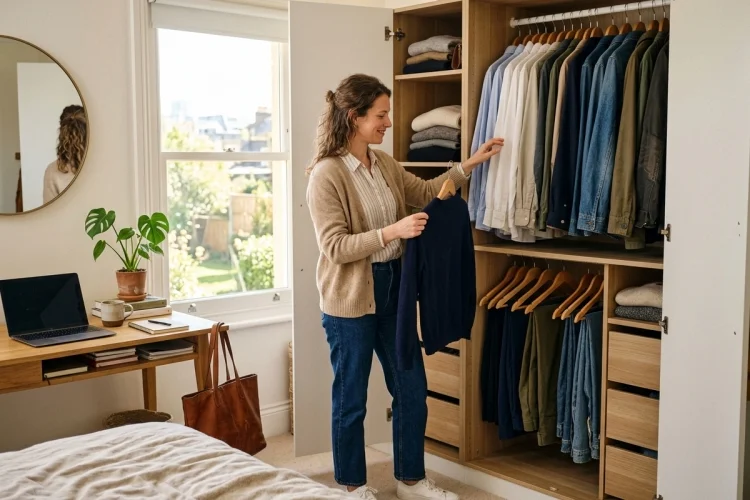
Have you ever opened a wardrobe packed with clothes and still felt like you had nothing to wear? The problem may not be that you need more clothes. Your wardrobe might simply not match the life you actually live.
Maybe you own plenty of formal pieces but work from home most days. Perhaps you keep buying beautiful jackets even though you live somewhere hot, or your closet is full of special-occasion outfits while what you really need is comfortable everyday clothing.
Learning how to build a wardrobe that matches your lifestyle means designing your closet around your real schedule, climate, activities, personal style, and comfort-not around an imaginary version of your life.
Fashion editors often describe versatile basics as the foundation of an effective wardrobe because they can be worn repeatedly and combined in different ways.
Vogue’s 2026 wardrobe guide, for example, emphasizes adaptable pieces such as shirts, jeans, tailored trousers, knitwear, and practical footwear.
The result is simple: fewer wardrobe frustrations and more clothes you genuinely enjoy wearing.
1. Start by Looking at How You Actually Spend Your Week
Before shopping for anything new, examine your normal seven-day routine.
Where do you spend most of your time?
Someone who works in an office five days a week will need a very different wardrobe from someone who works remotely, spends weekends outdoors, or attends frequent formal events.
Imagine your week is roughly 50% work, 30% casual activities, 10% exercise, and 10% social events. Your wardrobe should probably reflect similar proportions.
Yet many people do the opposite. They keep buying exciting evening clothes while struggling to find something comfortable for Tuesday morning.
Try a Simple Lifestyle Audit
Think about your main clothing categories:
Work, Casual, Exercise, Social Events, Formal Occasions, Home, and Seasonal Activities.
You do not need an exact percentage for each one.
The goal is simply to identify where your clothing needs are greatest.
Once you understand that, future shopping decisions become easier.
2. Identify What You Already Wear Repeatedly
Your favorite clothes contain useful information about your personal style.
Look at the pieces you wear every week.
Maybe you constantly reach for straight-leg trousers, relaxed shirts, simple sneakers, and lightweight jackets. Perhaps you prefer dresses because they require less outfit planning.
Instead of trying to change those habits, build around them.
Vogue’s minimalist wardrobe guidance recommends defining your own “wardrobe foundations” rather than copying somebody else’s list of essentials. The idea is that useful basics should reflect what makes you feel comfortable and confident.
So if you never wear blazers, you do not need one simply because every capsule wardrobe checklist includes it.
Your wardrobe essentials should be personal.
3. Create a Core of Versatile Basics
Once you understand what you regularly wear, identify the pieces that can become the foundation of multiple outfits.
For one person, that might mean:
- Two pairs of good trousers
- Several simple tops
- Comfortable jeans
- A lightweight jacket
- Everyday sneakers
- A versatile dress
For someone else, the list could look completely different.
What matters is versatility.
A useful wardrobe item should ideally work with several other pieces you own.
For example, one pair of neutral trousers might work with a T-shirt on Saturday, a button-down for work, and a knit top for dinner.
Fashion capsule guides regularly emphasize this mix-and-match principle because dependable staples can create numerous outfit combinations without requiring a huge closet.
Think in outfits rather than individual items.
4. Choose a Practical Color Palette
You do not need to wear neutral colors every day, but some coordination makes building outfits much easier.
Choose a few foundation colors that naturally work together.
Black, navy, grey, brown, beige, cream, white, olive, and denim are popular options, but there is no universal rule.
If you love bright colors, use them.
The important thing is making sure your wardrobe does not contain dozens of pieces that only coordinate with one specific item.
For example, you might use navy, cream, and denim as your main colors while adding green and burgundy as accents.
This creates variety without making every outfit a puzzle.
When shopping, ask:
Can I wear this with at least three things I already own?
If the answer is no, think carefully before buying it.
5. Dress for Your Climate, Not Someone Else’s
A wardrobe should make sense where you live.
A heavy collection of wool coats may look beautiful online, but it is not particularly useful if your climate is hot throughout most of the year.
Likewise, someone living somewhere cold will need reliable outerwear, knitwear, weather-resistant shoes, and layering pieces.
Think about temperature, humidity, rain, and seasonal changes.
In warmer climates, breathable shirts, lightweight trousers, easy dresses, comfortable sandals, and moisture-friendly fabrics may deserve more wardrobe space.
In colder climates, layering becomes more important.
A practical wardrobe solves everyday problems.
Fashion inspiration from another city or country can still be useful, but adapt it to your real environment instead of copying it exactly.
6. Build a Few Reliable Outfit Formulas
One of the easiest ways to make your wardrobe more functional is to stop inventing every outfit from scratch.
Create formulas that work repeatedly.
For example:
Work: Shirt + trousers + loafers
Casual: T-shirt + jeans + sneakers
Smart casual: Knit top + trousers + structured jacket
Weekend: Relaxed shirt + shorts + sandals
Dinner: Simple dress + comfortable shoes + accessories
These formulas are not uniforms in a boring sense. You can change the colors, fabrics, accessories, and individual pieces while keeping the structure.
Vogue’s outfit-formula coverage similarly shows how familiar wardrobe staples can be recombined into multiple practical looks.
Once you discover combinations that consistently work, take photos of them.
Your phone can become your personal outfit catalog.
7. Stop Buying Clothes for Your Fantasy Lifestyle
This is one of the most useful wardrobe rules.
Buy clothes for the life you currently live.
Maybe you imagine yourself wearing elegant cocktail dresses every weekend, hiking every month, or attending stylish business events constantly.
But if those things rarely happen, those clothes should not dominate your wardrobe.
There is nothing wrong with keeping a few special pieces.
The problem occurs when 40% of your wardrobe supports activities that represent 5% of your actual life.
Before purchasing something, ask yourself:
Where exactly would I wear this within the next month?
If you cannot think of a realistic answer, the item may belong to your fantasy lifestyle rather than your real one.
That simple question can prevent a surprising number of unnecessary purchases.
8. Prioritize Comfort and Fit
A wardrobe only works if you genuinely want to wear the clothes inside it.
Beautiful trousers that dig into your waist every time you sit down will probably stay on the hanger.
Shoes that hurt after ten minutes are not practical everyday shoes.
Pay attention to fit, movement, fabric feel, and comfort.
Try sitting, walking, and moving around when testing clothes.
You should also consider whether an item fits your real maintenance habits.
A delicate blouse requiring professional cleaning may be perfectly reasonable if you love it and wear it regularly. But if you avoid complicated laundry, five similar blouses probably do not make sense.
Practicality is part of personal style.
9. Buy Less, but Make Each Purchase Work Harder
A lifestyle-friendly wardrobe does not necessarily need to be large.
It needs to be useful.
Before buying something new, consider how many different ways you could realistically wear it.
A jacket that works for the office, weekends, travel, and dinner may deserve more wardrobe space than something useful for one highly specific occasion.
Keeping clothes in use for longer also has environmental benefits. WRAP’s work on clothing durability emphasizes that extending garment lifetimes can reduce waste and the resources associated with repeatedly producing replacements.
The Ellen MacArthur Foundation similarly promotes fashion systems in which clothing is designed and used for longer rather than quickly discarded.
This does not mean every purchase needs to be expensive.
Look for fit, usefulness, durability, and frequency of wear-not simply the price tag.
10. Take Care of the Clothes You Already Own
Building a great wardrobe is not only about buying.
Maintenance matters too.
Read clothing care labels before washing, drying, or ironing items. GINETEX explains that standardized care symbols provide guidance for washing, bleaching, drying, ironing, and professional textile care.
Repair small problems early.
Replace loose buttons, deal with stains, clean shoes, remove pilling where appropriate, and store clothes properly.
You may discover that an item you thought needed replacing simply needed some attention.
Good clothing care also keeps your wardrobe looking polished without requiring constant new purchases.
11. Review Your Wardrobe Regularly
Your lifestyle changes.
Your wardrobe should be allowed to change with it.
Perhaps you start working remotely, move somewhere with a different climate, begin exercising regularly, become a parent, change careers, or simply develop different style preferences.
Every few months, review what you are actually wearing.
Notice which clothes remain untouched.
Ask why.
Maybe they no longer fit, feel uncomfortable, do not match anything else, or belong to an old version of your lifestyle.
Sell, donate, repair, alter, or responsibly recycle items when appropriate.
Then identify genuine gaps before buying replacements.
This keeps your closet intentional rather than allowing it to slowly fill with clothes that no longer serve you.
Learning how to build a wardrobe that matches your lifestyle begins with understanding how you actually spend your time.
Identify the clothes you wear most, create versatile wardrobe foundations, choose colors that work together, and build simple outfit formulas. Dress for your climate, prioritize comfort and fit, and stop buying too many pieces for occasions that rarely happen.
Most importantly, make every new purchase solve a real wardrobe need.
Take ten minutes today to look through your closet and separate the clothes you wear regularly from the ones you rarely touch. The difference between those two groups can tell you a lot about the wardrobe you truly need.
The goal is not a perfect closet. It is a collection of clothes that makes getting dressed easier every day.