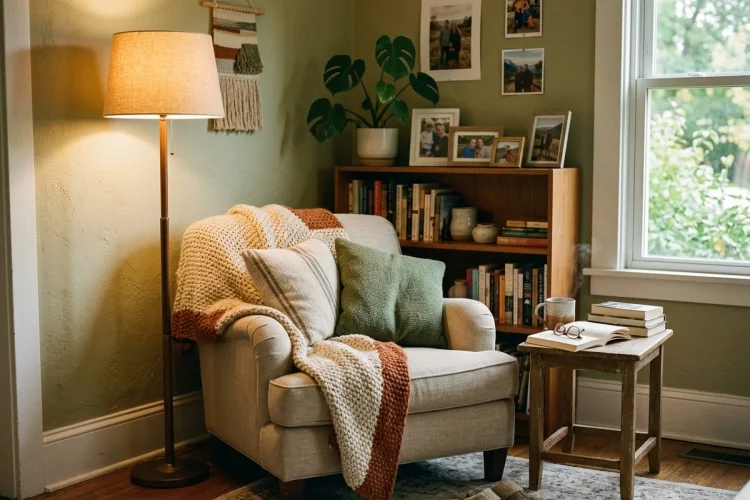
A comfortable home is not necessarily the biggest, most expensive, or most stylish one.
Sometimes a small apartment with soft lighting, a comfortable chair, and a few personal photographs can feel far more inviting than a beautifully decorated room that feels like nobody actually lives there.
That is because comfort comes from more than appearance.
Learning how to make your home feel more comfortable and welcoming involves thinking about how a space looks, feels, functions, smells, and even sounds.
Lighting, furniture placement, clutter, temperature, fresh air, textures, and personal belongings all contribute to the atmosphere of a room.
You also do not need a major renovation or an interior designer to improve your space. Many of the most effective changes are inexpensive and can be completed in an afternoon.
The goal is not to make your home look like a showroom. It is to create a place where you can relax at the end of the day and where visitors naturally feel comfortable spending time.
Here are some simple ways to get started.
1. Begin With the Rooms You Use Most
You do not have to redesign your entire home at once.
Start with the rooms where you spend the most time. For many people, that means the living room, bedroom, kitchen, or dining area.
Stand in the room and ask yourself what feels uncomfortable.
Is the furniture difficult to move around? Is there too much clutter? Does the room feel dark? Is there nowhere comfortable to sit with a cup of coffee?
Improving one frequently used space can make a bigger difference to daily life than decorating five rooms you barely use.
Begin with practical problems before buying decorations. A comfortable sofa position or a clear walkway often matters more than another decorative object.
2. Use Lighting to Create a Warmer Atmosphere
Lighting can completely change how a room feels.
A single bright overhead light may be useful when cleaning, but it can make a living room feel harsh during a quiet evening. Instead, consider using several smaller sources of light.
Table lamps, floor lamps, wall lights, and warm accent lighting can help create different levels of brightness.
During the day, make the most of natural light whenever practical. Open curtains or blinds and avoid placing large furniture directly in front of windows.
The U.S. Department of Energy describes daylighting as using windows and skylights to bring natural light into buildings, which can also reduce the need for artificial lighting.
You do not need to keep every room brightly illuminated. Create brighter areas for reading or working and softer lighting for spaces intended for relaxation.
3. Remove Clutter From the Most Visible Surfaces
A home does not need to be minimalist to feel comfortable.
However, when every table, counter, shelf, and chair is covered with objects, a room can start feeling visually busy.
Start with the surfaces you see most often.
Clear the coffee table, dining table, kitchen counter, and bedside table. Keep a few useful or meaningful objects rather than filling every available space.
One study involving dual-income households found an association between describing the home as cluttered or unfinished and stress-related patterns among women in the study, although the research was relatively small and does not mean clutter affects everyone in the same way.
You do not need to throw everything away.
Give frequently used belongings an easy-to-reach home, while storing occasional items somewhere less visible.
A little empty space can make everything else in the room stand out more.
4. Add Soft Textures
If a room looks fine but somehow feels cold or unfinished, texture may be what is missing.
Soft materials immediately make many spaces feel more comfortable.
Think about cushions, blankets, curtains, rugs, upholstered furniture, bedding, and fabric lampshades.
You do not need all of them.
A simple throw blanket across the sofa or a rug beneath a seating area can add softness without completely changing the room.
Try mixing textures rather than making everything identical. Smooth cotton, woven fabrics, wood, soft upholstery, and natural materials can create visual variety.
This is especially helpful in rooms dominated by hard surfaces such as tile floors, glass tables, metal furniture, or plain walls.
Comfort should also be practical.
Choose materials you can realistically clean and maintain, especially if you have children or pets.
5. Arrange Furniture for Conversation and Movement
Furniture placement affects how welcoming a room feels.
If every chair faces a television and people have to shout across the room to speak to each other, the space may not encourage much conversation.
Where possible, arrange seating so people can comfortably see one another.
That could mean placing two chairs opposite a sofa or moving furniture slightly closer together.
At the same time, preserve clear pathways.
Nobody wants to squeeze between a coffee table and sofa every time they cross the room.
A useful rule is to think about how people naturally move through your home. Avoid blocking commonly used routes with large furniture.
The best layout is not necessarily symmetrical or perfectly styled.
It is the one that makes everyday activities easier.
6. Make the Temperature and Air Feel Comfortable
A beautiful room is difficult to enjoy when it feels stuffy, damp, extremely hot, or excessively cold.
Comfort includes the physical environment.
Ventilate your home appropriately when outdoor conditions allow, and use kitchen or bathroom ventilation where available to help manage moisture and odors.
The U.S. Environmental Protection Agency identifies source control, ventilation, and filtration as three basic approaches to improving indoor air quality.
Humidity matters too.
EPA guidance suggests keeping indoor humidity below 60%, with roughly 30–50% considered ideal in many situations.
Excess moisture can also encourage mold growth. If you notice leaks, damp areas, or a persistent musty smell, deal with the moisture source rather than simply covering the smell with air freshener.
A fresh-feeling room is usually more welcoming than one filled with heavy artificial fragrance.
7. Bring a Little Nature Indoors
Plants are one of the easiest ways to add life to a room.
They introduce natural shapes, texture, and color without requiring a complete decorating plan.
You do not need to transform your living room into a greenhouse.
One healthy plant near a window, a small herb pot in the kitchen, or a few plants grouped together can soften a room.
Research into indoor plants has explored potential psychological and physiological benefits, although results differ between studies and plants should not be treated as a replacement for proper ventilation or air filtration.
A systematic review found some positive effects while also noting limitations in the available evidence.
If you regularly forget to water plants, choose low-maintenance varieties or simply incorporate natural materials, flowers, or views of outdoor greenery instead.
8. Add Things That Tell Your Story
Perfectly coordinated homes can sometimes feel surprisingly impersonal.
A welcoming home usually contains signs of the people who live there.
Display photographs, books you actually read, artwork you enjoy, souvenirs from meaningful trips, handmade objects, or something inherited from your family.
You do not need to display everything you own.
Choose a few items that have a story.
For example, a photograph from a memorable holiday can mean more to you than an expensive piece of generic wall art.
Your home should reflect your interests rather than whatever decorating trend is currently popular online.
Trends change quickly.
Personal meaning tends to last much longer.
9. Think About What Guests Actually Need
Making a home welcoming does not mean constantly preparing it for visitors.
However, a few practical details can help guests feel comfortable.
Make sure there is somewhere obvious to sit and somewhere to place a drink. Keep pathways reasonably clear and provide enough lighting for people to move around safely.
In the bathroom, simple things such as clean hand towels, soap, and toilet paper matter more than fancy decorations.
If someone is staying overnight, provide clean bedding, a place for their belongings, access to drinking water, and basic information they may need around the house.
Hospitality is usually about reducing awkwardness.
Guests feel more comfortable when they do not have to repeatedly ask where to sit, where to put something, or whether they are allowed to use something.
10. Use Scent Carefully
Smell strongly influences how we experience a room, but more fragrance is not automatically better.
Start with cleanliness and ventilation.
Take rubbish out regularly, keep fabrics reasonably fresh, deal with cooking odors, and address moisture or mold problems instead of masking them.
EPA notes that consumer products, furnishings, cleaning activities, and other indoor sources can contribute pollutants to indoor air.
If you enjoy scented candles, diffusers, or other fragrances, use them thoughtfully and consider the comfort of other household members and guests.
Some people are sensitive to strong scents.
Often, a clean room with fresh air and a subtle natural smell feels more inviting than one overwhelmed by perfume.
11. Create One Especially Comfortable Corner
You do not need every square metre of your home to be perfectly styled.
Instead, create one place that feels particularly comfortable.
It might be a reading chair beside a window, one side of the sofa with a lamp and blanket, a small balcony with plants, or a quiet corner for morning coffee.
Give that area a clear purpose.
Place the things you need nearby so you do not have to keep getting up.
If you read there, add good lighting and somewhere to place your book. If it is a coffee corner, keep a small table within reach.
Small areas of intentional comfort can change how you experience the entire home.
12. Aim for Comfortable, Not Perfect
Perhaps the easiest way to make a home more welcoming is to stop trying to make it perfect.
A lived-in house will occasionally have dishes in the kitchen, shoes near the door, books on the sofa, or children’s toys on the floor.
That is normal.
A welcoming home should feel easy enough to live in without everyone constantly worrying about ruining it.
Choose furniture that can actually be used. Keep decorations you genuinely like. Create storage systems that match your habits rather than expecting your household to behave like a magazine photoshoot.
Your home should support your everyday life.
If you can relax, move easily, find what you need, and enjoy spending time there, the design is already doing something right.
Learning how to make your home feel more comfortable and welcoming does not require expensive furniture or a major renovation.
Start with simple improvements: clear unnecessary clutter, adjust your lighting, improve furniture placement, add softer textures, bring in a little greenery, and pay attention to temperature and fresh air.
Then include personal items that make the space feel unmistakably yours. Most importantly, design your home around real life rather than perfection.
Choose one room today and identify the smallest change that would make it more pleasant. Move a lamp, clear a table, add a blanket, rearrange a chair, or open the curtains.
A welcoming home is built gradually, one thoughtful detail at a time.